March marks the transition from Zanzibar’s hot dry season into the long rains. Early March is warm and largely sunny, with temperatures of 28–32°C (82–90°F). By mid-to-late March, rainfall increases noticeably — averaging 130–150mm across the month — with heavier afternoon showers becoming more frequent. The sea remains warm at 27–29°C, but surface conditions can be rougher. March rewards flexible, budget-conscious travelers who plan their activities smartly.
Planning a trip and wondering what Zanzibar weather in March is really like?
March is a transition month in Zanzibar. It sits between the dry season (January–February) and the long rains (April–May). This means you’ll experience a mix of sunshine, humidity, and increasing rainfall.
But here’s the important part:
March is not a bad time to visit Zanzibar—it just requires the right expectations.
If you’re a traveler who:
- Wants fewer crowds
- Is flexible with activities
- Loves lush tropical scenery
- Doesn’t mind occasional rain
Then March can still be a rewarding time to visit.
In this guide, you’ll learn:
- What Zanzibar weather in March is really like
- How rainfall affects your trip
- What activities are still worth doing
- Where to stay and how to plan
- Expert tips from local tour specialists
And if you want help planning a smooth experience despite the changing weather, Visit Zanzibar Island Tours can help you organize everything from tours to transfers with flexibility in mind.
Table of Contents
What Is the Overall Weather in Zanzibar in March?
March sits at a turning point in Zanzibar’s climate calendar. The island is emerging from the hot dry season and moving toward the Masika — the long rains — which typically arrive in earnest in April.
Here is the at-a-glance data:
- Average daytime temperature: 28–32°C (82–90°F)
- Average nighttime temperature: 23–26°C (73–79°F)
- Average monthly rainfall: 130–160mm
- Rainy days: Approximately 13–17 days
- Humidity: Rising — 78–85%, noticeably heavier than February
- Sea temperature: 27–29°C (81–84°F) — still very warm
- Sunshine hours: 5–7 hours per day (declining through the month)
- UV index: Very high, especially in early March
The most important thing to understand about March is that it is not a uniform month. It behaves differently in its first two weeks than in its final two weeks, and planning with that in mind makes an enormous difference.
Early March (1st–14th): Feels much like a continuation of February. Mornings are mostly clear and sunny. Afternoon showers are present but usually short. Sea conditions are still largely calm on the west and north coasts. This is when March is at its most appealing for beach and water activities.
Late March (15th–31st): Rainfall increases in frequency and intensity. Overcast mornings become more common. Afternoon showers can extend into the early evening. Sea conditions on exposed coasts become choppier. Cultural and indoor activities become a bigger part of the daily rhythm.
Understanding this two-phase nature of March is the key to visiting successfully.
Is March a Good Time to Visit Zanzibar?
The honest answer: yes, with the right expectations.
March is not the best month for a pure beach holiday where you expect guaranteed sunshine every day. If that’s your primary goal, January and February will serve you better, and so will June through October.
But March is a genuinely good month for travelers who:
- Want lower prices. March represents the beginning of the shoulder and low seasons. Hotel rates drop noticeably compared to February’s peak pricing — often 20–35% less for the same properties. Tour prices also tend to be more negotiable.
- Prefer fewer crowds. The island empties out considerably in March. Popular north coast beaches are quieter. Tour boats are less packed. Stone Town’s alleyways feel less like a tourism thoroughfare and more like an actual living city.
- Appreciate natural beauty. March rain transforms Zanzibar. The spice farms are at their most fragrant and productive. Jozani Forest is lush and alive with birdsong. The whole island turns a deeper, richer green that the dry season never produces.
- Are flexible with daily planning. If you’re the kind of traveler who can shift your schedule around the weather — doing active things in the morning and relaxing or exploring culturally in the afternoon — March works very well.
- Have a longer trip. On a 7–10 day trip, a few rainy afternoons are no big deal. On a 3-night escape, they might feel more significant.
At Visit Zanzibar Island Tours, we plan and run tours throughout March every year. We know how to make it work, and we know which activities hold up best. Let us help you build a smart March itinerary.
→ Talk to our local team about your March trip
How Hot Is Zanzibar in March? Understanding the Temperatures
March remains hot — this is still a tropical island sitting close to the equator. But the character of the heat shifts compared to February.
Daytime temperatures average 28–32°C (82–90°F), which is slightly cooler than February’s peak. The cooling effect is real but subtle — what changes more noticeably is the feel of the heat. Higher humidity (regularly above 80%) makes March’s temperatures feel heavier and stickier than the same numbers in the drier months.
Cloudy days become more common through the month. While February typically gives you sharp, bright tropical sunshine, March increasingly features soft overcast skies — particularly in the afternoons. This actually provides some welcome relief from direct UV exposure, though you should never assume cloud cover means you won’t burn.
Nights and evenings are warm and comfortable, around 23–26°C (73–79°F). The added humidity means evenings can feel muggy rather than refreshing. Sea breezes along the coast remain your best ally for comfort.
A practical note: The combination of heat, humidity, and physical activity in March demands even more attention to hydration than the drier months. Carry water everywhere, especially during morning tours, and drink before you feel thirsty.
Month-by-month temperature comparison:
| Month | Avg. High | Avg. Low | Rainfall | Rainy Days |
|---|---|---|---|---|
| January | 32°C / 90°F | 25°C / 77°F | 65mm | 8–10 |
| February | 34°C / 93°F | 26°C / 79°F | 45mm | 5–7 |
| March | 31°C / 88°F | 24°C / 75°F | 145mm | 13–17 |
| April | 29°C / 84°F | 23°C / 73°F | 330mm | 22+ |
| May | 27°C / 81°F | 22°C / 72°F | 190mm | 18–20 |
| June | 26°C / 79°F | 21°C / 70°F | 50mm | 6–8 |
March sits right between the brilliance of February and the full force of April’s rains. Think of it as a month with the warmth of summer and the unpredictability of spring.
How Much Rain Falls in Zanzibar in March?
This is the central question for March — and it deserves a direct, detailed answer.
Zanzibar receives roughly 130–160mm of rainfall in March, spread across approximately 13–17 days. This makes March significantly wetter than January or February, but dramatically drier than April (which typically sees 300–350mm) or May (190mm).
What does March rain actually look like on the ground?
The rain in March does not typically fall as a steady all-day drizzle. It tends to fall in the classic tropical pattern: clear or partly cloudy mornings, building clouds through the late morning and early afternoon, and then rain arriving in the afternoon — sometimes briefly, sometimes for several hours. The intensity varies enormously from day to day.
In early March, this pattern produces showers that are genuinely brief and barely disruptive. In late March, the showers can be heavier, longer, and occasionally involve thunderstorms with dramatic lightning over the Indian Ocean — which, from the comfort of a covered restaurant terrace, is spectacularly beautiful.
The important nuance: Rainfall figures are island-wide averages. In our experience on the ground, the west coast and north coast tend to receive slightly less rain than the east coast in March, and mornings almost always remain usable. The east coast faces more direct exposure and can be wetter and choppier earlier in the month.
What this means for your trip planning:
- Prioritise active and outdoor tours for the morning slot — ideally starting by 8–9am
- Build in afternoon flexibility: a beachside restaurant, a café in Stone Town, a spa treatment, or an indoor cultural experience
- Don’t let the rainfall figures alone put you off — the actual experience in early-to-mid March is significantly better than the monthly average suggests
What Are the Sea Conditions in Zanzibar in March?
Sea conditions in March are a mixed picture, and they shift meaningfully as the month progresses.
- Sea temperature: 27–29°C (81–84°F) — still beautifully warm, among the year’s highest
- Underwater visibility: Declining from February’s peak; typically 12–20 metres, dropping to 8–15 metres by late March as rain stirs up sediment
- Wave height: Increasing on exposed coasts; the calm of the northeast monsoon begins to give way to unsettled pre-rain conditions
- Currents: Variable and increasingly unpredictable as the Masika approaches
The west and north coasts — particularly the areas around Nungwi, Kendwa, and Stone Town — hold calmer conditions for longer into March than the exposed east coast does. These remain the safest and most comfortable areas for swimming and boat trips, especially in the first half of the month.
The east coast (Paje, Jambiani, Bwejuu) becomes progressively more challenging for swimming and water sports through March. Rough seas, strong currents, and declining visibility at snorkeling spots mean the east coast is better visited for its atmospheric beauty and beach walks in March than for water activities.
Boat trips and snorkeling: Our Mnemba Snorkeling Tour and Safari Blue excursions continue operating through most of March — particularly in the first two weeks — but we assess conditions daily and operate with the highest safety standards. Some days we go, some days we recommend a different activity. This is honest, experienced local judgment, not over-caution.
Sea turtle nesting: One genuinely special March phenomenon is the beginning of sea turtle nesting season along certain Zanzibar beaches. Green turtles and hawksbill turtles begin laying eggs on quiet beaches in March. For nature-focused travelers, this adds a magical dimension to March that no other month offers.
What Activities Work Best in Zanzibar in March?
The key to a great March trip in Zanzibar is matching your activities to the conditions intelligently. Here is the full picture of what works, what works with flexibility, and what to approach with caution.
Stone Town Cultural Immersion


March is arguably the best month of the year to explore Stone Town authentically. The crowds of peak season have thinned, local life carries on at its own rhythm, and the slightly cooler, occasionally overcast temperatures are actually more comfortable for walking the narrow streets for hours. The historic carved doors, the Old Fort, the spice markets, Forodhani Gardens, the Palace Museum, and the House of Wonders are all fully accessible and far less congested than in January or February.
Evening walks through Stone Town in March have a quality all their own — the warm, humid air carries the scent of spices, grilled seafood, and the sea. It is one of Zanzibar’s most atmospheric experiences.
→ Book the Stone Town Tour Zanzibar
Spice Farm Tour
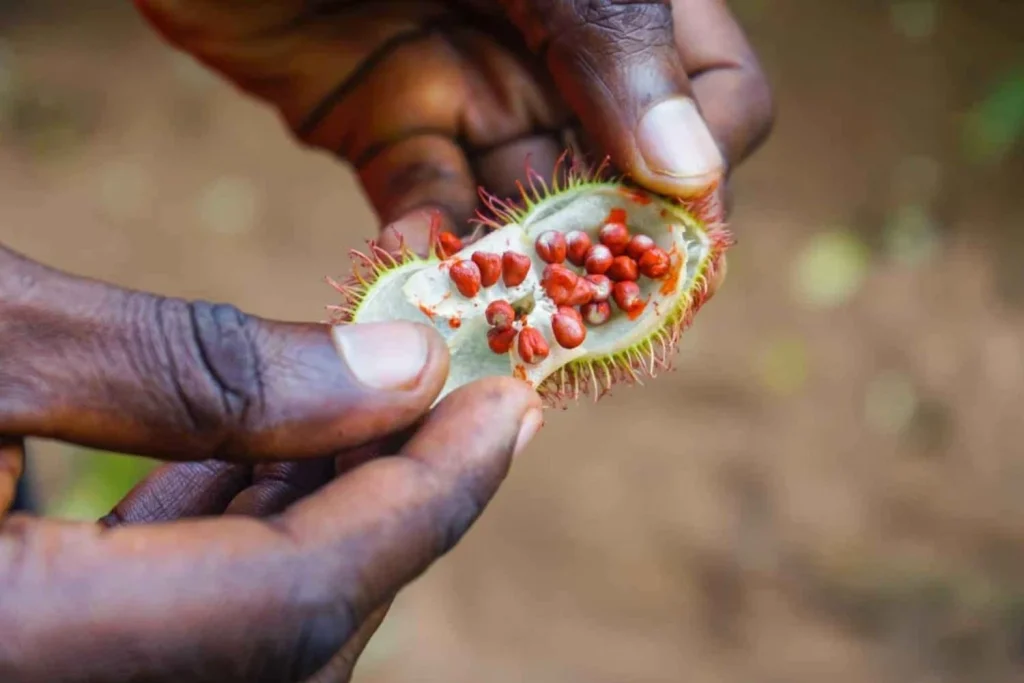


If there is one activity that March does better than any other month, it is the spice farm tour. March is when Zanzibar’s famed spice plantations are at their most lush and aromatic. The rains revive and energise every plant on the farm. Cloves, vanilla, black pepper, cardamom, cinnamon, nutmeg, turmeric, lemongrass — everything is growing vigorously and the scents are extraordinary.
We schedule spice tours for the morning, before the afternoon showers arrive, and they run beautifully in March. This is genuinely a highlight of visiting in this month.
→ Book the Spice Farm Tour Zanzibar
Jozani Forest Tour


The Jozani-Chwaka Bay National Park is spectacular in March. The forest is deeply green, birdsong fills the canopy, and the endemic Zanzibar red colobus monkeys are active and highly visible. March rainfall creates a richly alive ecosystem that the dry months simply cannot replicate. The trails are walkable — slightly muddy in places, but manageable with the right footwear.
Go in the morning, ideally before 10am, to catch the monkeys at their most active and to beat any afternoon rain.
→ Explore the Jozani Forest Tour
Prison Island Tour


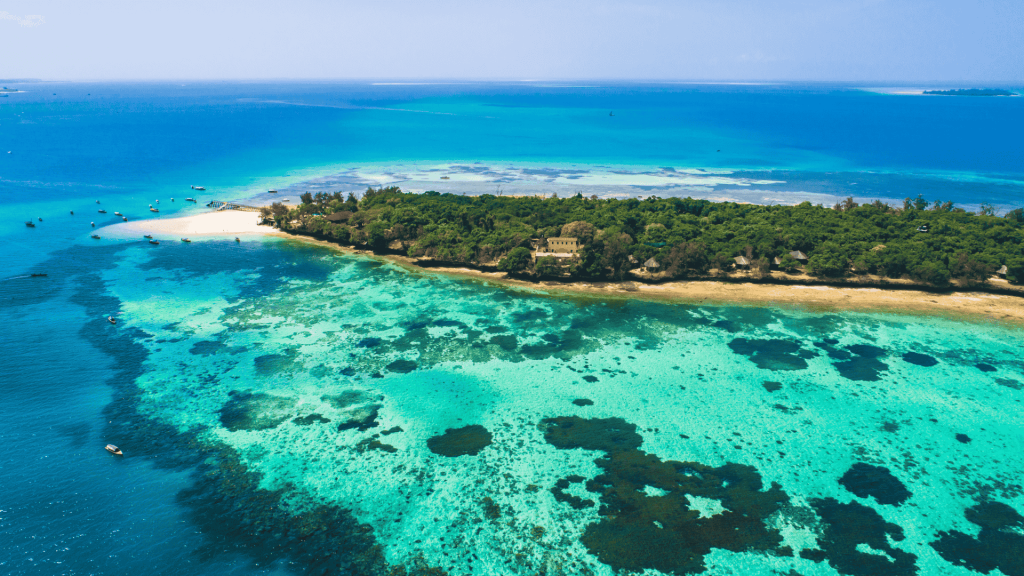
The short boat crossing from Stone Town to Prison Island (Changuu) remains very manageable in March, particularly in the morning when sea conditions are calmest. The giant Aldabra tortoises are resident year-round, the surrounding reef is still snorkeable in early March, and the island itself is beautifully green and tranquil.
→ See the Prison Island Tour Zanzibar
Village Culture Tour





One of the experiences that March amplifies beautifully is the Village Culture Tour. With fewer tourists on the island, village visits feel genuinely authentic rather than performative. Local families go about their real daily lives, markets are vibrant, and the interactions between guide, guest, and community are warmer and more personal. March quietude is an asset for cultural tourism.
→ Explore the Village Culture Tour Zanzibar
Sunset Dhow Cruise


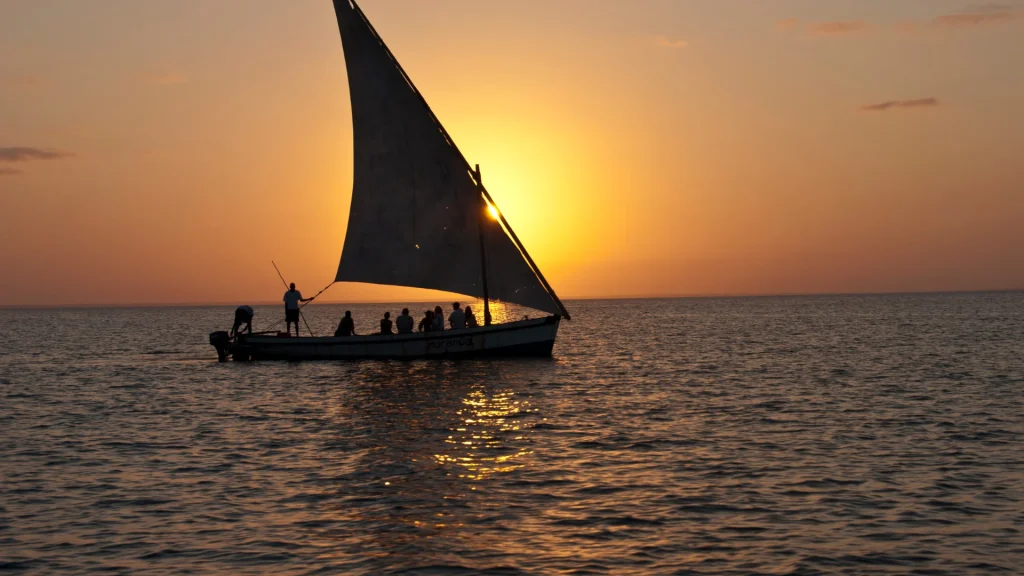
March’s dramatic skies — building clouds lit by the setting sun over the Indian Ocean — produce some of the most photogenic sunsets of the entire year. A sunset dhow cruise from Stone Town’s seafront captures this beautifully. Even in March, evenings on the water are warm and memorable, and the light show as the sky turns from gold to deep orange to purple is extraordinary.
→ Book the Sunset Dhow Cruise Zanzibar
Horse Riding on the Beach
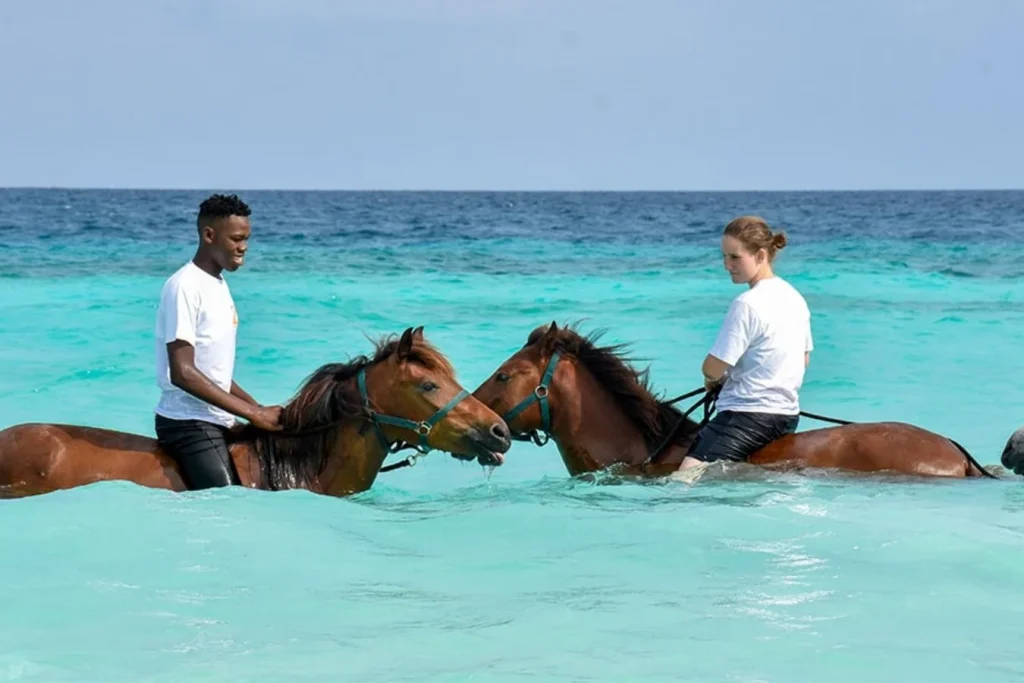
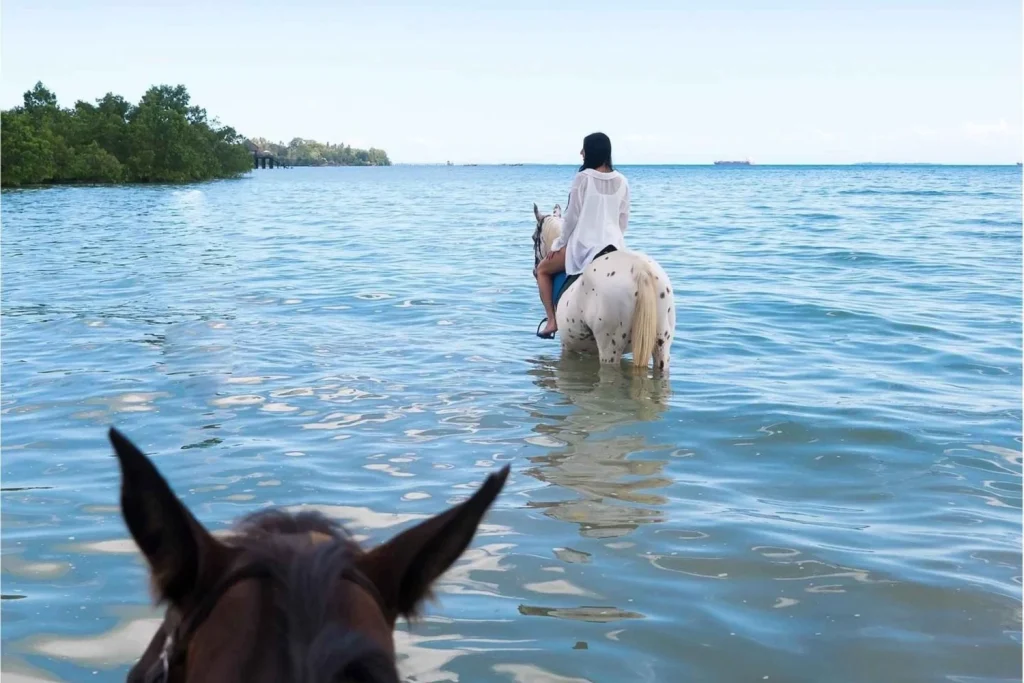
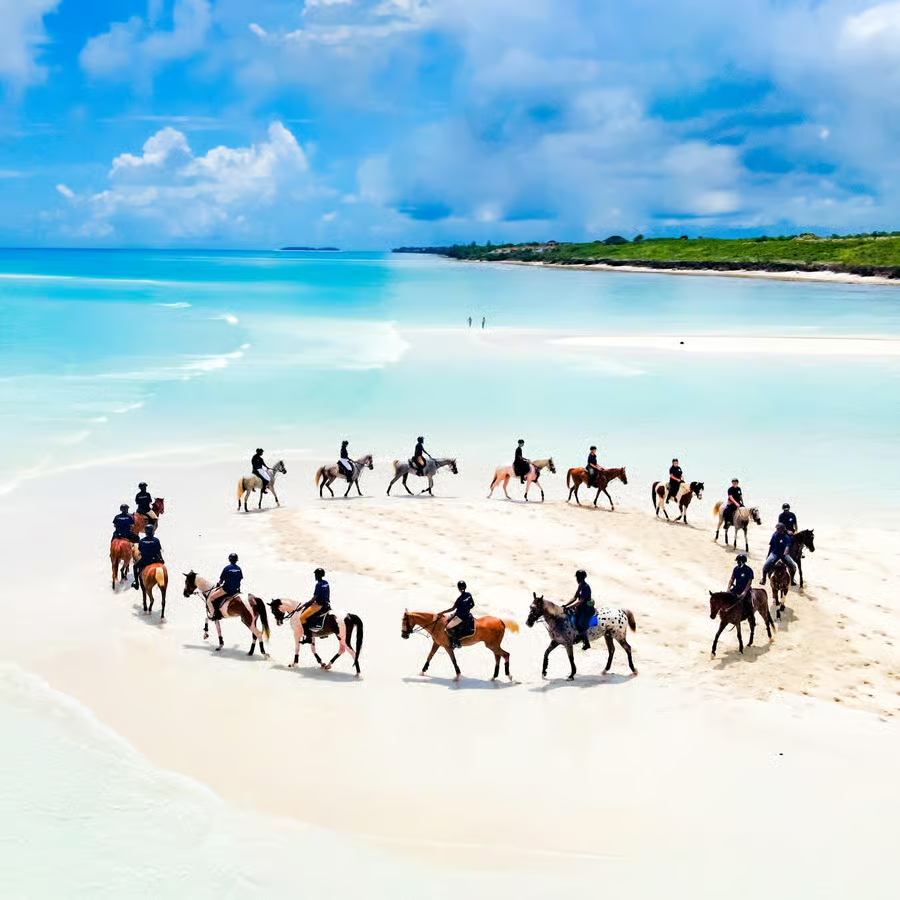
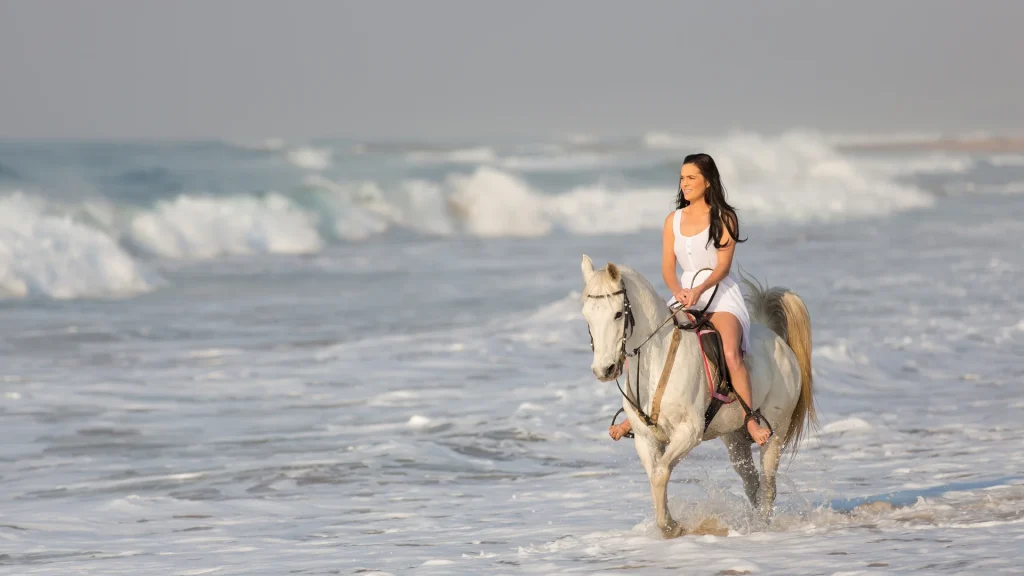
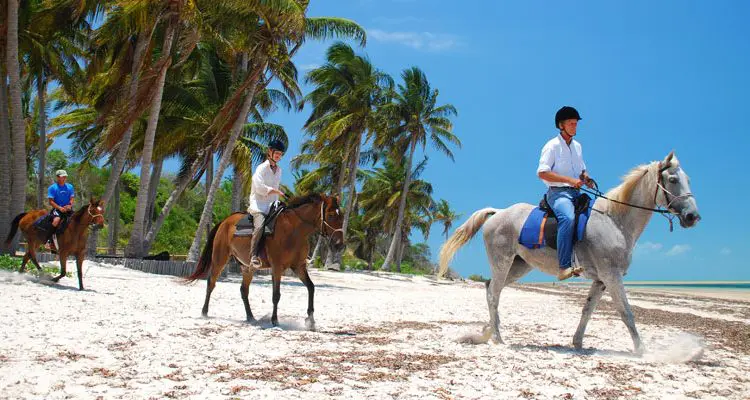
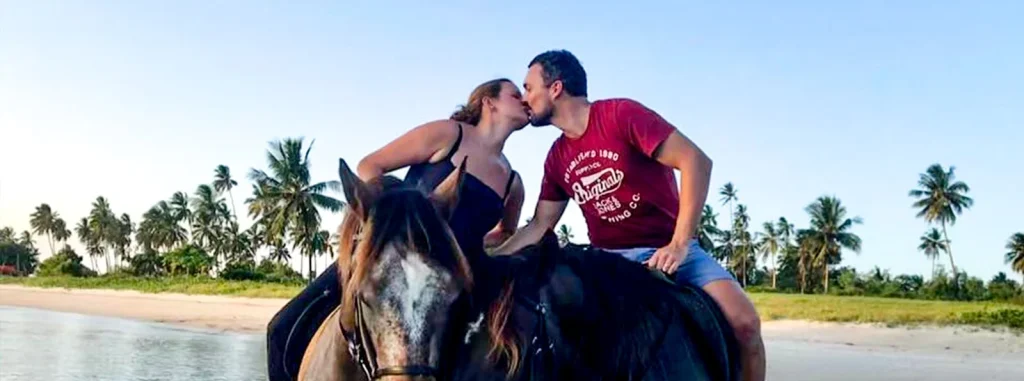
An early morning horse ride along Zanzibar’s less-visited beaches in March is genuinely magical. The sand is freshly washed, the air is clean and fragrant, and the light is soft and beautiful. This is an experience that works especially well before the afternoon heat and showers arrive.
→ Discover Horse Riding in Zanzibar
What Works With Smart Planning in March
Snorkeling at Mnemba Atoll


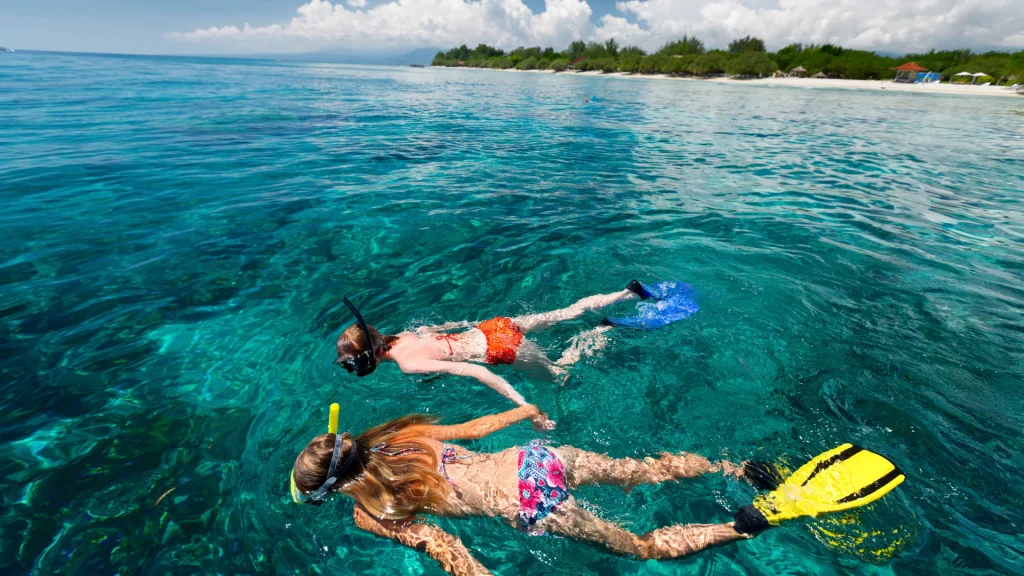


The Mnemba Snorkeling Tour runs in March, but we advise guests honestly: conditions are best in early March and can deteriorate by late month. Visibility is still good in the first two weeks — typically 15–20 metres — and the sea around the northern Mnemba Atoll tends to hold calmer conditions than the exposed east coast. We assess each morning before sending boats out. When the conditions are right, Mnemba in March is still exceptional.
→ Book your Mnemba Snorkeling Tour
Safari Blue Tour


The Safari Blue tour runs in early March and on appropriate days through the month. Sea conditions on the southwest coast (Menai Bay) can be excellent in the morning during early March, and many guests have had outstanding Safari Blue experiences in this month. By late March, we are more conservative with go/no-go calls. We always prioritise safety, so if conditions aren’t right on your booked day, we will work to find an alternative.
→ Explore the Safari Blue Zanzibar Tour
Dolphin Tour at Kizimkazi

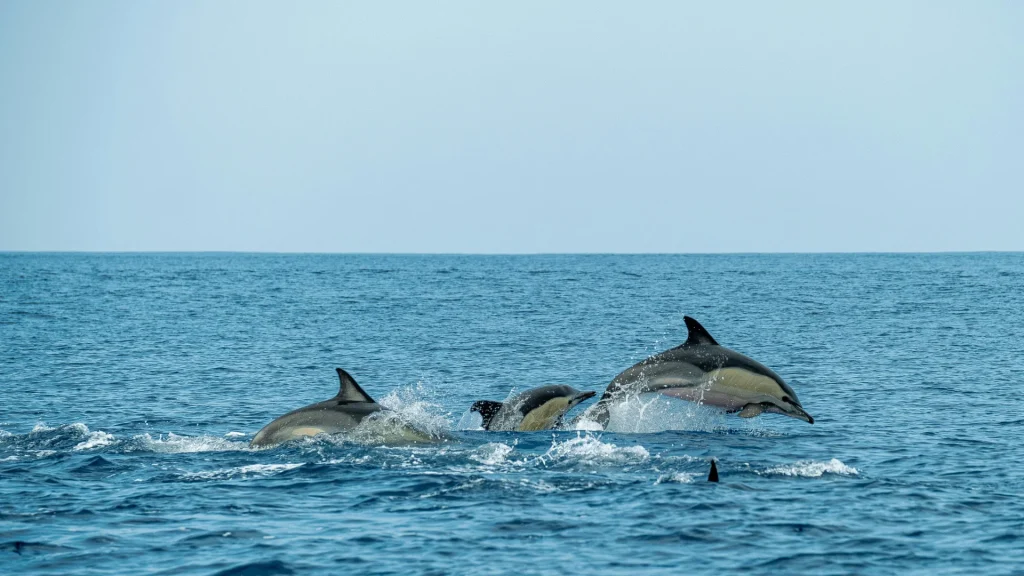


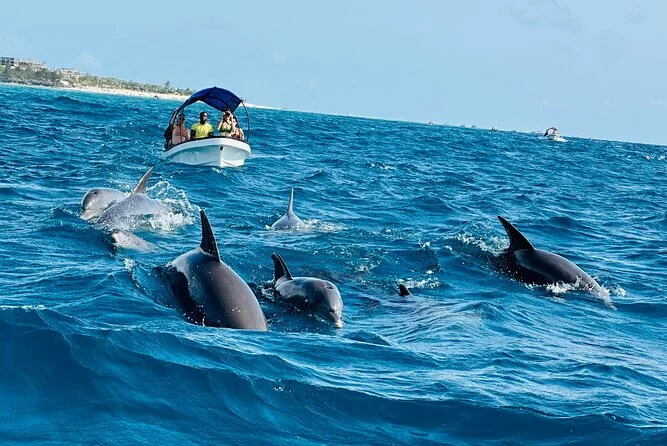
The dolphin tour continues in March, with morning departures from Kizimkazi in the south. Spinner and bottlenose dolphins are present year-round in these waters. Early morning is when sea conditions are calmest and dolphin activity is highest. March mornings in the south can be beautiful — just be back on shore before the afternoon weather builds.
→ Book the Dolphin Tour Zanzibar
Swimming with Turtles

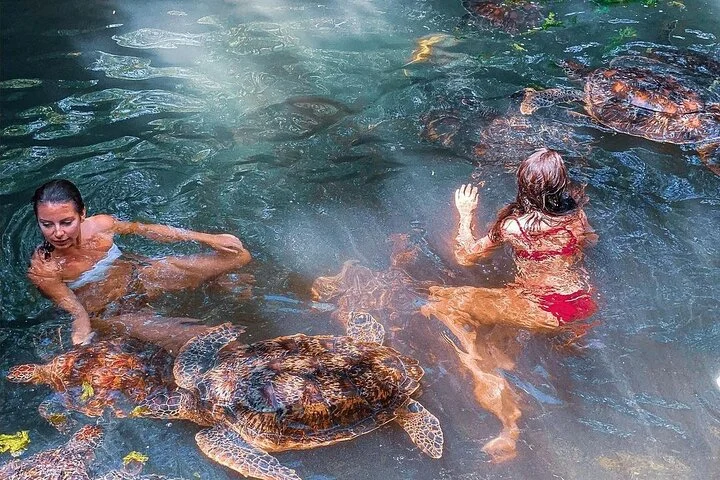


Sea turtle sightings remain excellent in March, and snorkeling for turtles in the calm western coastal waters continues to work well, particularly in the first half of the month. The beginning of nesting season adds an extra layer of wonder for nature lovers visiting in March.
→ See Swimming with Turtles in Zanzibar
Scuba Diving
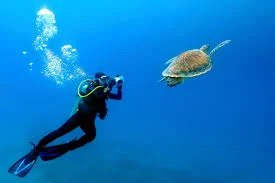
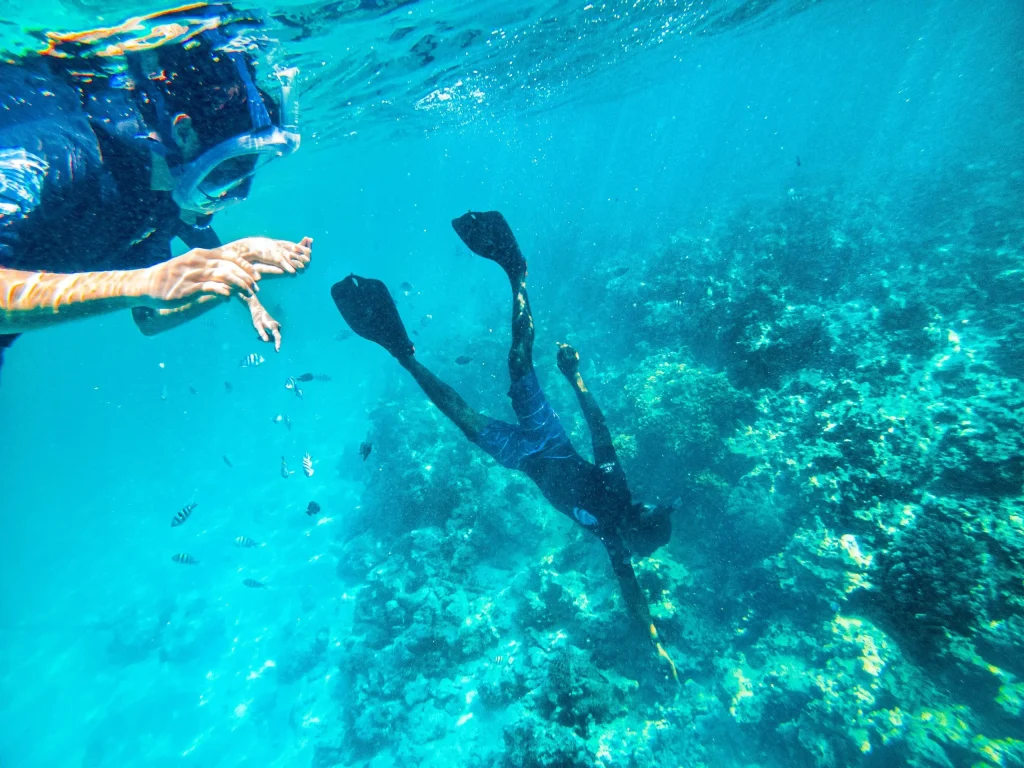
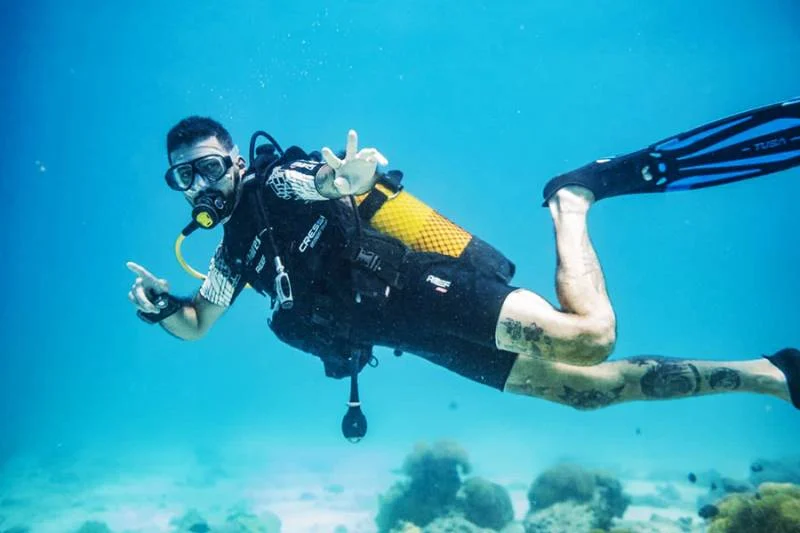

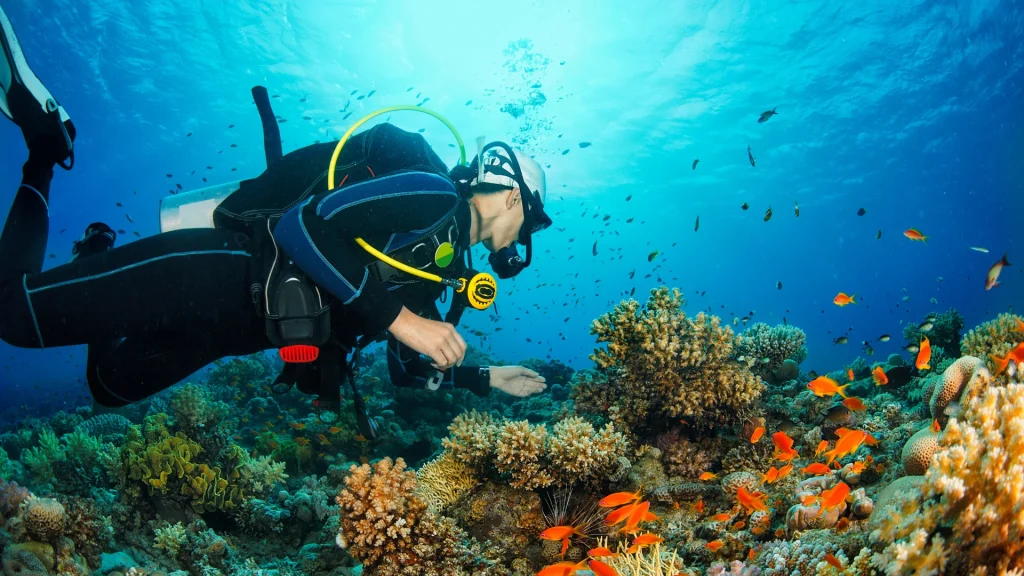
Diving in March requires flexibility. Early March can still deliver good conditions at west-coast and north-coast sites, with visibility of 12–18 metres and warm water temperatures. As the month progresses, surface conditions and visibility can decline. Experienced divers will find March manageable and interesting — the changing current patterns can actually make for more dynamic dive experiences. Beginners are better served by a different month.
→ See the Scuba Diving Tour Zanzibar
What to Approach With Caution in March
East coast beach swimming — The rough seas and strong currents on Paje, Jambiani, and Bwejuu in the second half of March make ocean swimming increasingly hazardous. These beaches are still beautiful to walk and photograph, but open-water swimming in late March requires caution and local knowledge.
Quad biking and outdoor adventures in late March — Heavy rain can make off-road tracks slippery and significantly less enjoyable. If you’re planning adventure activities, book them early in your trip to catch the most likely-clear early-March window.
Parasailing — Wind and sea conditions in late March can make this impractical. Check with us on the day.
Great Combo Tours for a March Visit
March’s mix of reliable indoor and cultural activities alongside still-operational outdoor tours makes it ideal for combination experiences. You can do a lush morning spice farm visit and then explore Stone Town’s cool coral-stone alleys in the afternoon. You can do a morning Mnemba snorkeling trip and spend the rainy afternoon relaxing at your resort. Flexibility is the March superpower.
Our combination tours work particularly well in March:
- Spice Farm & Jozani Forest Tour — lush, fragrant, and both at their very best in March
- Spice Farm & Stone Town Tour — the quintessential Zanzibar cultural day
- Village Tour & Spice Farm Tour — deep local immersion at its best when tourist numbers are low
- Spice Farm, Jozani Forest & The Rock Restaurant — a full cultural and culinary day
- Prison Island & Stone Town Tour — history, culture, and giant tortoises in one morning
For those wanting a fully planned March stay, our holiday packages include accommodation, guided tours, and transfers — and our local team will actively help you adapt the daily schedule around the weather:
- 3 Days / 2 Nights Package from $295
- 4 Days / 3 Nights Package from $475
- 5 Days / 4 Nights Package from $660
- 7 Days / 6 Nights Package from $955
→ See all Zanzibar Holiday Packages
How Busy Is Zanzibar in March? Crowds and Prices
March is when the island noticeably quietens down, and for many travelers that is precisely the appeal.
Crowds: By mid-March, the majority of European winter-escape tourists have returned home, and the next wave of visitors (June–August) is months away. Popular beaches like Nungwi and Kendwa feel spacious. Stone Town’s famous narrow streets are easier to photograph without crowds in the frame. Tour boats carry fewer passengers. The island belongs a little more to you.
Prices: This is where March genuinely rewards the savvy traveler. Hotel rates typically drop 20–35% compared to peak season. Some properties, particularly mid-range resorts, offer their lowest rates of the first half of the year. Accommodation that might feel out of budget in February can become accessible in March.
What to be aware of: Some smaller guesthouses and boutique properties begin maintenance closures toward the end of March in preparation for the long rains. If you’re traveling in late March, confirm directly with your accommodation that they’ll be open and fully operational.
Our honest pricing guidance: At Visit Zanzibar Island Tours, we offer the same quality of experience in March as any other month — our guides, boats, and vehicles don’t change with the season. What changes is the flexibility we build into March itineraries, and the fact that you’ll share fewer experiences with crowds.
How Does March Compare to Other Months?
| Month | Season | Weather Quality | Crowds | Prices | Best For |
|---|---|---|---|---|---|
| Jan | Hot dry | Excellent | High | Peak | Beach, diving, all tours |
| Feb | Hot dry | Best of year | Very High | Peak | Snorkeling, romance |
| Mar | Transition | Good → Mixed | Low–Med | Shoulder | Culture, nature, budget |
| Apr | Long rains | Poor | Very Low | Low | Not recommended |
| May | Long rains end | Improving | Low | Low | Budget adventurers |
| Jun | Cool dry | Good | Med | Mid | All activities |
| Jul–Aug | Cool dry | Peak dry | Very High | High | Everything |
| Sep–Oct | Cool dry | Excellent | High | High | Diving, wildlife |
| Nov | Short rains | Mixed | Low | Shoulder | Shoulder deals |
| Dec | Hot dry | Good | Very High | Peak | Beach, festive |
March vs February: February is unquestionably better for beach and water activities, with far less rain and no weather uncertainty. If you have flexibility, February edges March for a sunshine-focused trip.
March vs April: March is incomparably better than April. April is Zanzibar’s wettest month by far — many operators scale back significantly, road conditions worsen, and outdoor activities are severely curtailed. If you’re debating between March and April, March wins decisively.
March vs June–October: The cool dry season delivers more reliable outdoor conditions. But it’s also more crowded and more expensive. March gives you a warmer, quieter, and cheaper island experience — just with more weather variability.
Early March is the sweet spot. If you have date flexibility and are choosing within March, the first two weeks consistently deliver the best conditions.
What Should You Pack for Zanzibar in March?
March packing needs to cover both the remaining hot dry weather of early in the month and the increasingly rainy conditions toward the end. Here’s what actually belongs in your bag:
Rain Protection — Essential for March
- A compact, packable waterproof rain jacket (not a heavy cagoule — a light packable one you can fold into a bag)
- A small travel umbrella — useful for late-afternoon cover in town
- Quick-dry clothing — anything that dries fast is an asset in March’s humid conditions
- A dry bag for boat trips and beach days — essential for protecting your phone and camera
Sun & Heat Protection — Still Critical
- Reef-safe sunscreen SPF 50+ (the UV is still strong, especially in early March)
- Wide-brimmed hat and quality UV sunglasses
- UV-protective rash guard for snorkeling
Clothing
- Lightweight breathable fabrics — linen and cotton
- Swimwear (2–3 sets) — you will still be in the water regularly
- Modest cover-ups for Stone Town visits (loose linen trousers, light long tops)
- Comfortable closed-toe shoes or trail sandals with grip — particularly important if you’re doing forest trails in March, which can be muddy
Health & Practical Items
- Malaria prophylaxis — speak to your travel doctor; malaria risk increases in the rainy season
- DEET insect repellent — mosquito activity increases in March with the rain; evenings require particular protection
- Electrolyte sachets — still important in the heat and humidity
- Reusable water bottle
- Basic first aid kit with anti-fungal cream (humidity can cause minor skin issues in tropical rainy conditions)
- Universal Type G adapter
For a full packing list, see our What to Pack for Zanzibar guide.
Practical Tips for Getting the Most Out of March in Zanzibar
These are the insights we share with every March traveler who books with us:
1. Book early in your trip for water activities, late for cultural ones. Weather is most stable in the first days of your stay in early March. Lock in your snorkeling, Safari Blue, and dolphin watching for days one through three. Use later days — when weather might be more variable — for Stone Town, spice farms, and indoor experiences.
2. Watch the mornings, not the forecast. March weather apps can be unreliable. The most accurate signal is the morning sky itself. If the sky is clear and blue by 7–8am, it’s almost always safe to proceed with outdoor activities. If it’s already overcast at dawn, shift to a cultural or indoor activity and keep outdoor plans for the next morning.
3. Embrace the afternoon rain. Some of our most content March guests are those who lean into the rhythm rather than fighting it. An afternoon downpour is the perfect time for a slow lunch at a local restaurant, a walk through Stone Town’s covered markets, a massage at a spa, or simply relaxing with a book and a coconut on your veranda while watching the rain fall on the ocean. There is real beauty in it.
4. Choose north or west coast accommodation for March. If beach access matters to you, base yourself in Nungwi, Kendwa, or on the west coast near Stone Town rather than on the east coast. The west and north coasts hold calmer, more swimmable conditions longer into March than the exposed east coast.
5. Take advantage of the prices. March is genuinely one of the best months for value in Zanzibar. If you’ve been looking at a property that felt just out of reach in peak season, check their March rates — you might be pleasantly surprised. We can advise on accommodation options alongside your tour bookings.
6. Dress for humidity, not just heat. March humidity is higher than the dry season months. Wearing breathable natural fabrics is even more important. Avoid synthetic materials that trap moisture — you’ll be uncomfortable quickly.
7. Increase your malaria vigilance. As the rains begin, mosquito populations increase. Use DEET repellent every evening without fail, sleep under a net if your accommodation provides one, and ensure you’ve taken appropriate prophylaxis before travelling.
8. Get a local SIM card. With potentially more time indoors or at cafés during rainy afternoons, a local Tanzanian SIM card (Vodacom or Airtel) with data is useful for planning on the go. Available at the airport on arrival.
Getting to and Around Zanzibar in March
Flights: March sees reduced flight demand compared to peak season, which often translates into better fares — particularly mid-March through the end of the month. Connecting flights via Nairobi, Dar es Salaam, Doha, or Dubai remain the most common routes. Zanzibar’s international airport (ZNZ) operates year-round with no seasonal closures.
Ferries from Dar es Salaam: Ferry services continue running daily in March, but sea conditions on the channel can be rougher than in the dry months, particularly in the second half of the month. The fast ferry crossing takes approximately 2 hours. If you’re prone to motion sickness, take precautions and choose morning departures when seas tend to be calmer.
Getting around the island: March road conditions are generally still good in the first half of the month. By late March, some unpaved rural tracks — particularly in the centre and south of the island — can become slippery and muddy. A 4WD rental vehicle is a sensible choice if you’re planning to explore beyond the main roads.
For stress-free airport arrivals and inter-island travel, our private transfer service handles pickups and drop-offs island-wide, and our car rental service offers well-maintained vehicles with driver options if you prefer guided ground transport.
Who Is March in Zanzibar Perfect For?
Rather than a long discussion, here’s a direct summary of who March suits best:
March is ideal for:
- Budget-conscious travelers who want a genuinely good experience at lower cost
- Repeat visitors who’ve seen Zanzibar in peak season and want a different, quieter perspective
- Nature lovers — the lush forest, nesting sea turtles, and vibrant birdlife in March are outstanding
- Cultural travelers for whom Stone Town, spice farms, and local village life are the priorities
- Couples seeking a romantic, uncrowded island escape without peak-season pricing
- Photographers drawn to dramatic skies, lush green landscapes, and moody ocean light
- Flexible travelers who enjoy adapting to conditions rather than requiring certainty
March may not be ideal for:
- First-time visitors with non-flexible itineraries who expect guaranteed beach conditions every day
- Families with very young children who cannot easily adapt to weather changes
- Divers focused on maximum visibility and optimal current conditions
- Anyone with just 2–3 days, where rainy afternoons would take up a larger proportion of the trip
Frequently Asked Questions: Zanzibar Weather in March
Is it worth visiting Zanzibar in March?
Yes — if you go in with the right expectations. March is not the guaranteed sunshine of the dry season, but it offers excellent value, lower crowds, outstanding cultural experiences, and a beautifully lush version of the island. Early March in particular can deliver conditions that rival the late dry season. Flexible travelers who are happy to adapt their schedule around the weather consistently have great experiences.
Does it rain every day in Zanzibar in March?
No. With an average of 13–17 rainy days in the month, March has roughly as many dry days as rainy ones. Rain is heavily concentrated in the afternoons — mornings are mostly clear, especially in early March. You are very unlikely to experience a full day of uninterrupted rain in March.
When does the rainy season start in Zanzibar?
The long rains — known locally as the Masika — typically begin in earnest in early-to-mid April. March is the transitional month leading into this. Rainfall increases progressively through March, but the true start of the rainy season is April. May also remains wet, with conditions improving from June onward.
Can you still swim in the sea in Zanzibar in March?
Yes — particularly on the north and west coasts. Sea temperatures remain warm at 27–29°C, and the beaches at Nungwi and Kendwa continue to offer comfortable swimming through most of March. The east coast (Paje, Jambiani) becomes increasingly rough in the second half of the month and requires more caution.
Are tours available in Zanzibar in March?
All our main tours operate in March, with some weather-dependent flexibility. Cultural tours (Stone Town, spice farms, Jozani Forest, village tours, Prison Island) run without weather disruption. Water-based activities (snorkeling, Safari Blue, dolphin tours) operate in March — especially in early March — with daily condition assessments. We always prioritise safety over revenue, and if conditions aren’t right for a water tour, we will offer a genuine alternative.
Is March a good month for wildlife in Zanzibar?
March is excellent for wildlife in Zanzibar. The Jozani Forest is at its lushest, red colobus monkey activity is high, and the March bird life is rich — some migratory species are still present before the April rains push them through. Critically, March marks the beginning of sea turtle nesting season along Zanzibar’s quieter beaches — a genuinely special natural phenomenon that peak-season visitors never witness.
Should I book tours in advance for March?
Less urgency than peak season, but still advisable. Most tours have good availability in March, but it’s still wise to book key experiences — particularly Safari Blue and Mnemba snorkeling — at least 1–2 weeks ahead to guarantee your spot on the best-condition mornings. For accommodation, booking 3–4 weeks ahead is generally sufficient in March, though this varies by property.
What health precautions should I take for a March trip to Zanzibar?
Malaria prophylaxis is essential year-round in Zanzibar, but the risk increases as rains begin in March. Start prophylaxis as directed by your travel doctor before departure. Use DEET-based insect repellent every evening. Ensure your yellow fever vaccination is current if arriving from an endemic country. Drink bottled or purified water only, and stick to reputable restaurants — food safety standards matter year-round.
Conclusion
Zanzibar weather in March offers hot sunny mornings, the year’s warmest seas at 29.5°C, and increasing but manageable rain—making early March a fantastic shoulder-season sweet spot with fewer crowds and excellent value.
We’ve shared every detail you need—from temperatures and packing to activities and real tips—so you can decide with confidence. At Visit Zanzibar Island Tours we turn March’s unique rhythm into unforgettable, hassle-free holidays through our expert local knowledge and flexible packages.
Ready to secure your spot? Explore our Zanzibar Holiday Packages from $295 or contact our team today for a personalized March itinerary. Let’s create your perfect island escape—talk soon and we’ll see you on the beaches of Zanzibar! Safe travels.