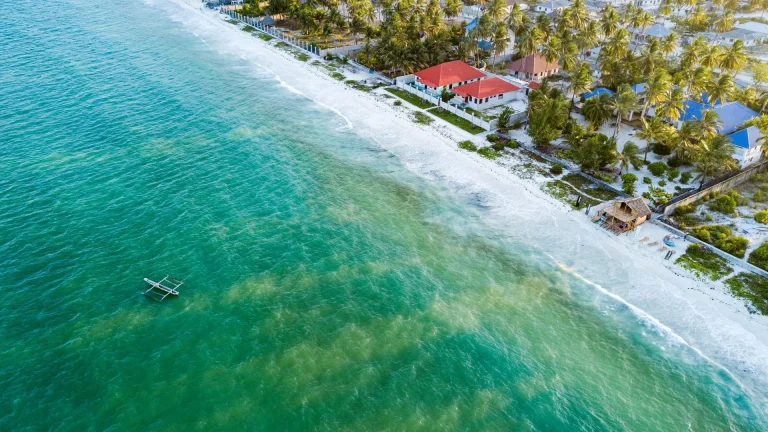
Zanzibar in February is the hottest and one of the driest months, with average daytime highs of 32–33°C (90–91°F) and nighttime lows around 25°C (77°F). Rainfall drops to just 50–55mm across 5–7 days, mostly short showers. Humidity stays at 75–80%, sunshine reaches 8–10 hours daily, and sea temperatures peak at 28–29°C (82–84°F)—ideal for swimming, snorkeling, and water sports.
If you’re thinking about visiting Zanzibar early in the year, you might be wondering: what is Zanzibar weather like in February?
The good news is that February is one of the best months to travel to Zanzibar.
This month sits right in the middle of the island’s short dry season, which runs roughly from late December through February. During this time, Zanzibar enjoys long sunny days, warm tropical temperatures, and minimal rainfall.
For travelers dreaming of turquoise waters, powder-white beaches, and unforgettable island experiences, February offers ideal conditions.
Whether you want to:
- Relax on Zanzibar’s famous beaches
- Swim in the warm Indian Ocean
- Go snorkeling or diving
- Explore historic Stone Town
- Experience a dolphin tour or sandbank trip
February provides fantastic weather for nearly everything the island offers.
In this complete guide, you’ll discover:
- What Zanzibar weather in February is really like
- Average temperature, rainfall, humidity, and sea conditions
- Whether February is a good time to visit Zanzibar
- The best activities to do during this month
- Practical travel tips and packing advice
And if you’re planning a Zanzibar holiday, you’ll also learn how Visit Zanzibar Island Tours can help you organize your tours, transfers, and unforgettable island experiences.
Table of Contents
What Is the Overall Weather in Zanzibar in February?
February is the climax of Zanzibar’s hot dry season, which spans from December through February. In simple terms: it is the hottest, sunniest, and driest month on the entire calendar.
Here’s the at-a-glance snapshot:
- Average daytime temperature: 30–34°C (86–93°F)
- Average nighttime temperature: 25–27°C (77–81°F)
- Average monthly rainfall: 40–50mm
- Rainy days: Approximately 5–7 days
- Humidity: 70–80%, softened by sea breezes on the coast
- Sea temperature: 28–30°C (82–86°F) — the warmest of the year
- Sunshine hours: 8–9 hours per day
- UV index: Extreme — factor 50+ sunscreen is not optional
What this means in practice: mornings are bright, hot, and crystal clear. Afternoons are intense — this is when the heat peaks, and spending that time in the ocean or in the shade is a wise strategy. Evenings are warm and deeply pleasant, perfect for sunset cruises, night markets, and long dinners.
The rare showers that do occur are brief, warm, and usually gone within an hour. February rain in Zanzibar is nothing like rain in Europe or North America — it’s a warm tropical drizzle that rarely cancels plans.
Is February a Good Time to Visit Zanzibar?
February is, objectively, one of the top three months to visit Zanzibar — and for many travelers, it is the single best month of the year.
Here is why:
The weather is at its peak. More sunshine, less rain, and warmer sea temperatures than any other month. If your vision of a Zanzibar holiday involves a brilliant blue sky, turquoise water, and white sand, February delivers that vision most consistently.
The sea is at its clearest and warmest. Water temperatures of 28–30°C make snorkeling and diving pure pleasure. Visibility reaches 25–30 metres at top sites. This is the month we’d recommend above all others to anyone planning an underwater-focused trip.
Sauti za Busara happens in February. This internationally acclaimed Swahili music and arts festival fills Stone Town with energy, colour, music, and culture for several days. It’s a genuinely unmissable experience that adds an extraordinary cultural layer to any February visit.
The only real considerations: It is peak season, so prices are high and accommodation books out fast. The heat is also more intense than in other months — some travelers, particularly those unaccustomed to tropical heat, can find the midday hours quite challenging. But with good planning, neither of these things needs to diminish your trip.
How Hot Is Zanzibar in February? Understanding the Temperatures
Let’s be direct: February is hot. It is the hottest month in Zanzibar’s calendar, and arriving without that expectation can be a shock.
Daytime highs regularly hit 32–34°C (90–93°F), sometimes pushing toward 35°C (95°F) in the early afternoon. Combined with humidity levels of 70–80%, it can feel warmer still — particularly away from the coastal breezes.
The coast is your friend. One of the things we always tell guests is that the coast of Zanzibar manages the heat far better than the interior. The northeast Kaskazi trade winds, which are active in February, create a consistent breeze along the beaches and waterfront that makes 33°C feel genuinely comfortable. Stone Town’s seafront, Nungwi beach, and boat trips on the open water all benefit from this natural air conditioning.
Mornings are the golden window. From 7am to around 11am, the heat is warm but manageable — ideal for active tours, forest walks, and cultural exploration. From noon to 3pm is when the sun is punishing. This is best spent in the water, under shade, or at a beachside restaurant. After 4pm, the day softens beautifully into one of those long, luminous tropical evenings that make Zanzibar so seductive.
How February compares to surrounding months:
| Month | Avg. High | Avg. Low | Avg. Rain | Rainy Days |
|---|---|---|---|---|
| December | 30°C / 86°F | 24°C / 75°F | 65mm | 8 |
| January | 32°C / 90°F | 25°C / 77°F | 65mm | 8–10 |
| February | 34°C / 93°F | 26°C / 79°F | 45mm | 5–7 |
| March | 31°C / 88°F | 24°C / 75°F | 130mm | 14 |
| April | 29°C / 84°F | 23°C / 73°F | 330mm | 22+ |
February is the peak on almost every positive metric: highest temperature, lowest rainfall, fewest rainy days. March marks the beginning of the long rains, which is why February — if you have any flexibility — edges it out as the smarter choice for a beach and water holiday.
How Much Rain Does Zanzibar Get in February?
February is the driest month of the year in Zanzibar. The numbers confirm what you’ll experience on the ground: this is reliably sunny, dry weather.
- Monthly rainfall average: 40–50mm
- Rainy days: Roughly 5–7 in the entire month
- Rain character: Short, warm afternoon showers — typically 20–45 minutes
- Morning rain: Very rare; mornings are almost universally clear
To put this in perspective: April, Zanzibar’s wettest month, receives over 300mm. February receives roughly one-seventh of that. The island’s spice farms, forests, and beaches are at their driest and most accessible.
In our experience running tours through February, rain cancellations are extremely rare. When showers do come, they’re usually brief enough that a boat trip can pause, wait it out, and continue — and often the post-shower light over the Indian Ocean is among the most beautiful you’ll see. Every cloud genuinely has a silver lining in February.
One thing to watch: Late February can occasionally see the early build-up toward the long rains that begin in March. In some years, the final days of February bring slightly more cloud cover and occasional heavier showers. If your dates fall in the last week of February, this is worth knowing — but it’s far from guaranteed and shouldn’t alter your plans.
What Are the Sea Conditions in Zanzibar in February?
This is where February truly shines, and it’s the reason we recommend it above almost every other month for snorkelers, divers, and anyone whose holiday centres on the ocean.
- Sea temperature: 28–30°C (82–86°F) — the warmest of the year
- Underwater visibility: 20–30 metres at top sites like Mnemba Atoll
- Wave height: Low to moderate; generally calm on west and north coasts
- Currents: Gentle northeast Kaskazi monsoon keeps conditions smooth
The northeast trade winds that characterise February are a blessing for sea conditions. They blow from the northeast across the open ocean, creating particularly calm and clear water on the western and northern coasts of the island. This is the same wind that historically brought Arab traders to Zanzibar’s shores on their dhow sailing vessels — and today it brings near-perfect conditions for everything from a leisurely swim off Kendwa beach to advanced diving at Leven Bank.
The east coast (Paje, Jambiani, Bwejuu) faces the open Indian Ocean directly and can be more exposed. The shallow tidal flats are particularly dramatic in February’s low tides. This is an excellent coast for kitesurfing, long beach walks, and that otherworldly turquoise shallow-water photography — but for deep swimming, the north and west coasts are calmer.
Water temperature note for divers: At 28–30°C, February’s water is the warmest of the year. You can comfortably snorkel or freedive in swimwear. For scuba divers doing multiple long dives, a thin 3mm wetsuit will keep you comfortable over extended sessions and protect against jellyfish.
What Activities Are Best in Zanzibar in February?
February’s combination of calm seas, peak water temperatures, and abundant sunshine means virtually every activity on the island is running at its absolute best. Here’s the breakdown:
Snorkeling at Mnemba Atoll


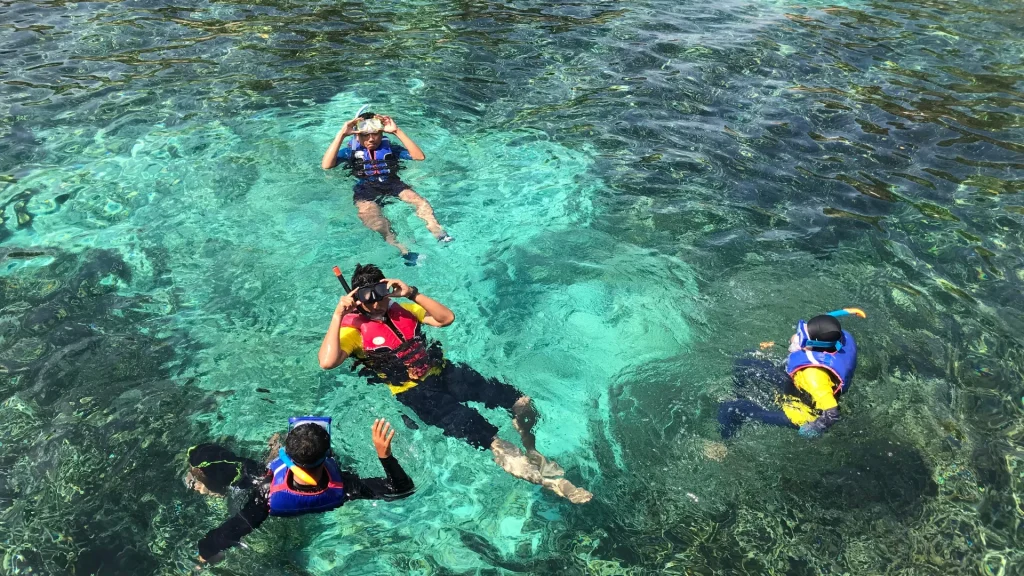
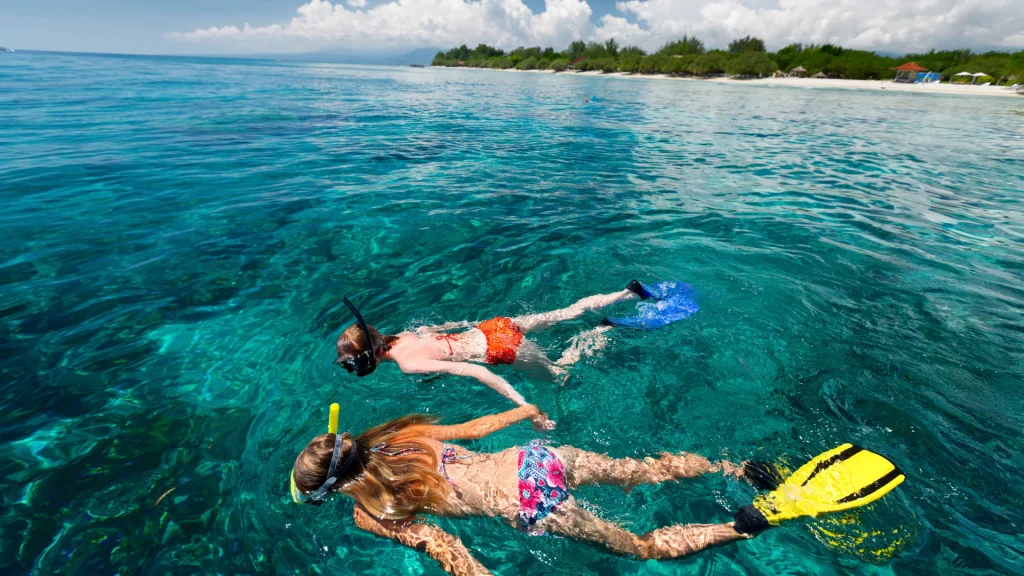


The Mnemba Snorkeling Tour is one of the most popular experiences we offer — and February is when it’s at its finest. Mnemba Atoll, just off the northeast coast, is a protected marine reserve teeming with green turtles, reef sharks, eagle rays, lionfish, and dense schools of tropical fish. February’s warm, clear water means you can spend extended time in the water without discomfort, and visibility frequently exceeds 25 metres.
This is the tour we recommend booking first when planning a February trip — slots are limited and they fill up well in advance during peak season.
→ Book your Mnemba Snorkeling Tour
Safari Blue — Zanzibar’s Most Iconic Day Out


The Safari Blue tour is a full-day dhow sailing expedition through the Menai Bay Conservation Area in the southwest of the island. You sail on a traditional wooden dhow, snorkel in pristine lagoons, visit a remote sandbank, spot dolphins, and finish with a legendary fresh seafood lunch on the beach. It is the experience guests mention most when they tell us what they’ll never forget about Zanzibar.
February sea conditions on the southwest coast are excellent for this trip. The calm waters make the dhow sailing smooth and the snorkeling crystal clear. February is our busiest month for Safari Blue bookings — plan ahead.
→ Explore the Safari Blue Zanzibar Tour
Scuba Diving
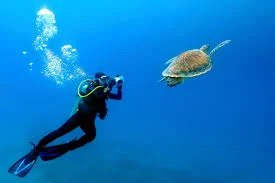
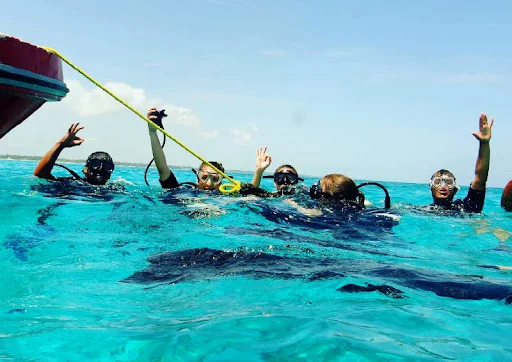
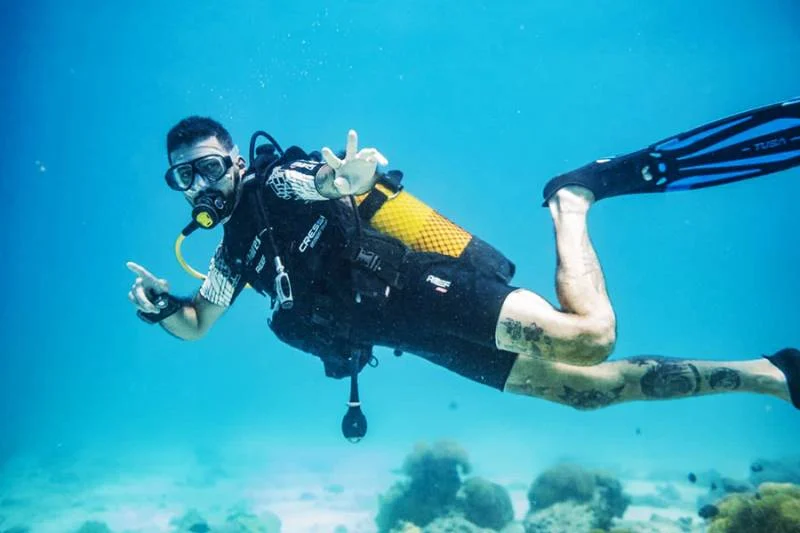
February offers what many experienced divers consider Zanzibar’s finest conditions of the year. The warmest water, best visibility, and calm surface conditions combine to make dive sites like Mnemba Atoll, Leven Bank, and Pange Reef exceptional. If you’ve been thinking about getting your PADI Open Water certification, February is an excellent time — the warm, clear water makes learning to dive as comfortable as it gets.
→ See the Scuba Diving Tour Zanzibar
Sauti za Busara Music Festival



This is the unmissable February-specific event. Sauti za Busara is East Africa’s premier Swahili music and arts festival, held annually in Stone Town’s Old Fort (Ngome Kongwe). For several days in February, the ancient fort becomes an open-air stage filled with tafuta rhythms, taarab, bongo flava, and world music acts from across the African continent and beyond.
The festival brings Stone Town alive in a way that’s unlike any other time of year — the streets buzz with musicians, artists, food vendors, and visitors from around the world. If your dates overlap with Sauti za Busara, you are getting a bonus that money cannot buy in any other month.
Check the official Sauti za Busara website for exact annual dates before booking, as they vary slightly each year.
Sunset Dhow Cruise


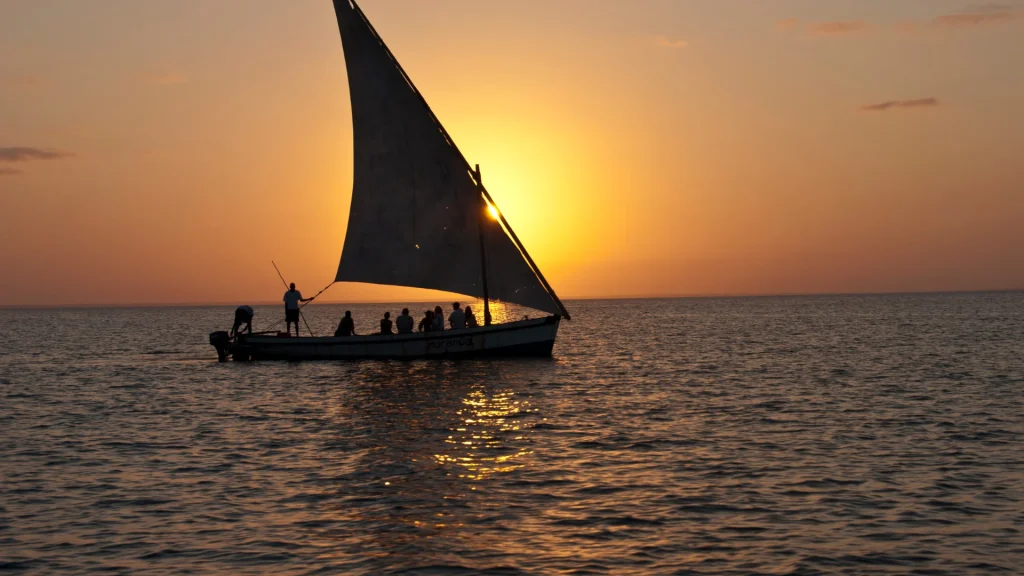
A sunset dhow cruise off Zanzibar’s west coast in February is an experience in pure tropical beauty. The sky turns pink and gold, the ocean is calm and glassy, and the traditional wooden dhow glides silently across the water as the sun drops below the horizon. February’s long, warm evenings make sunset around 6:30–6:45pm — perfect timing for a pre-dinner cruise.
→ Book the Sunset Dhow Cruise Zanzibar
Swimming with Turtles



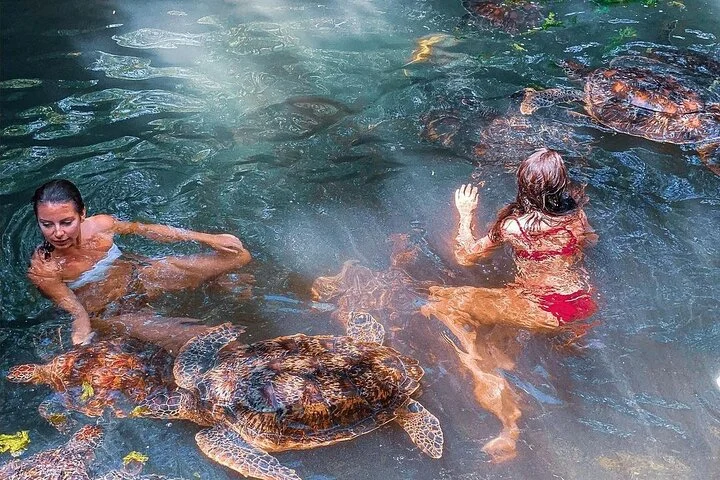

Zanzibar’s waters are home to green and hawksbill turtles, and February’s warm, clear conditions make encounters magical. Our swimming with turtles experience takes you to dedicated turtle spots where you can snorkel alongside these ancient, graceful creatures in their natural habitat. It’s a family favourite and one of the most moving experiences on the island.
→ Explore Swimming with Turtles in Zanzibar
Stone Town Cultural Tour


February’s warm evenings make a Stone Town tour especially enjoyable. The UNESCO World Heritage city of Stone Town is at its most alive and atmospheric in the evening hours — when the heat softens, the alleyways fill with the scent of grilled seafood from Forodhani Gardens, and the ancient carved doors and coral stone buildings glow in golden light.
Morning visits are equally rewarding — the historic markets, the Old Fort, the House of Wonders, the Palace Museum, and the narrow winding streets all deserve at least half a day.
→ Discover the Stone Town Tour Zanzibar
Spice Farm Tour


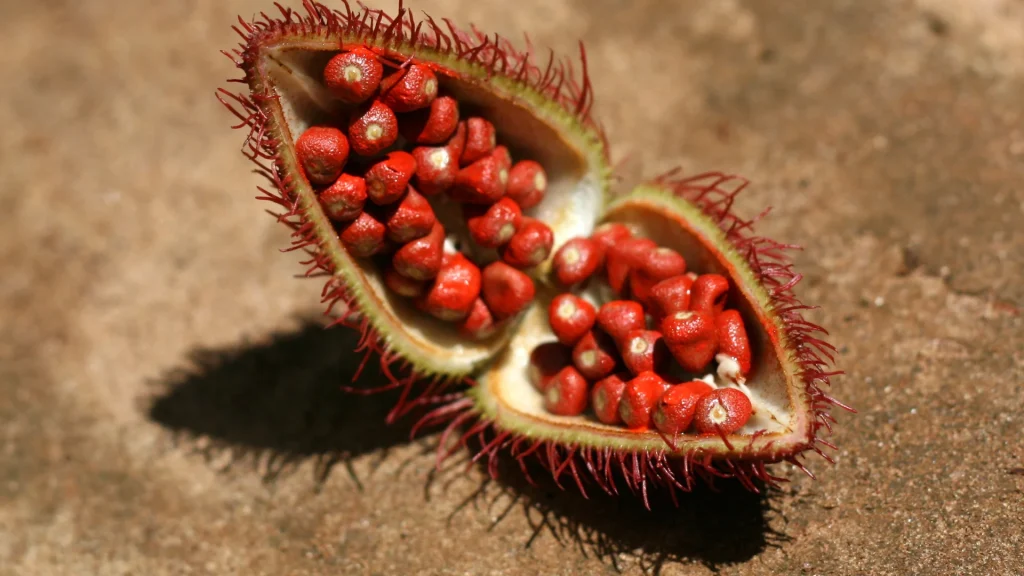
Zanzibar’s fame as the Spice Island is well earned, and the spice farm tour is one of our most popular experiences. February is an excellent time to go — the farms are lush and productive, with cloves, vanilla, black pepper, cardamom, cinnamon, lemongrass, and dozens of other spices all thriving. A knowledgeable local guide walks you through the plantation, lets you taste and smell everything, and explains the cultural and historical importance of each plant to Zanzibar’s story.
Schedule this for the morning — it involves walking in the open, and staying ahead of the afternoon heat makes it far more enjoyable.
→ Book the Spice Farm Tour Zanzibar
Prison Island Tour


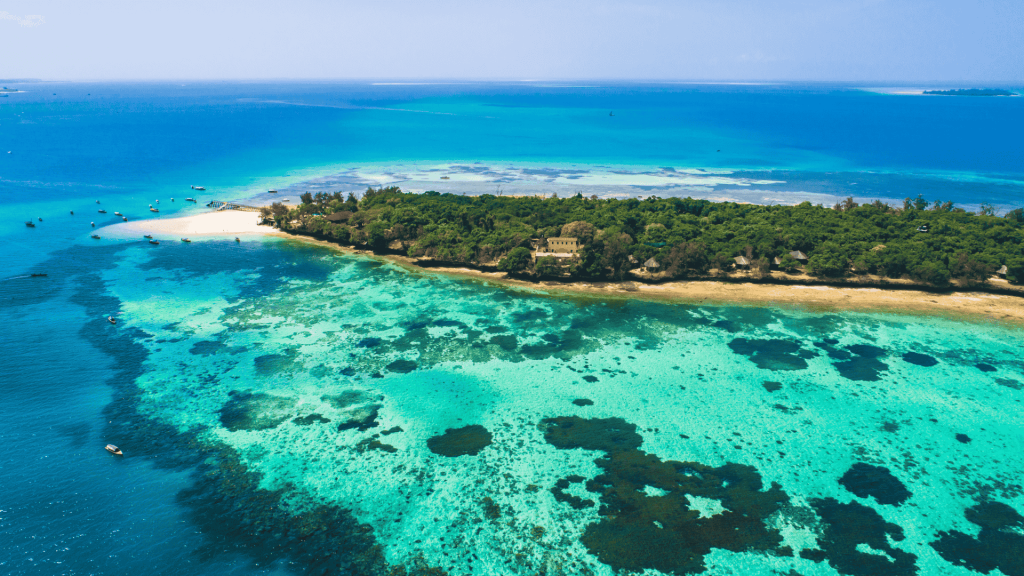
A short boat ride from Stone Town’s seafront takes you to Changuu Island — Prison Island — where giant Aldabra tortoises that are over a century old roam freely. The surrounding waters are a protected marine reserve with excellent snorkeling. February’s calm sea crossing from Stone Town makes for a quick, smooth journey, and the reef around the island is at its most colourful in these warm, clear conditions.
→ See the Prison Island Tour Zanzibar
Transparent Kayak Tour


One of our most visually stunning experiences — the transparent kayak tour lets you paddle over coral reefs and seagrass beds in a clear-bottomed kayak, watching the marine life below as if you’re floating on air. February’s crystal-clear water and high visibility make this experience absolutely extraordinary. It works beautifully as a morning activity before the heat of the day peaks.
→ Book the Transparent Kayak Zanzibar Tour
Jozani Forest & Red Colobus Monkeys


The Jozani Forest tour takes you into Zanzibar’s only national park — a forest reserve home to the endemic Zanzibar red colobus monkey, found nowhere else on Earth. February’s dry conditions mean the trails are easy to walk and the vegetation is not too dense, making wildlife spotting easier. Visit in the morning (before 10am if possible) to see the monkeys most active and the light most beautiful.
→ Explore the Jozani Forest Tour
Dolphin Tour at Kizimkazi


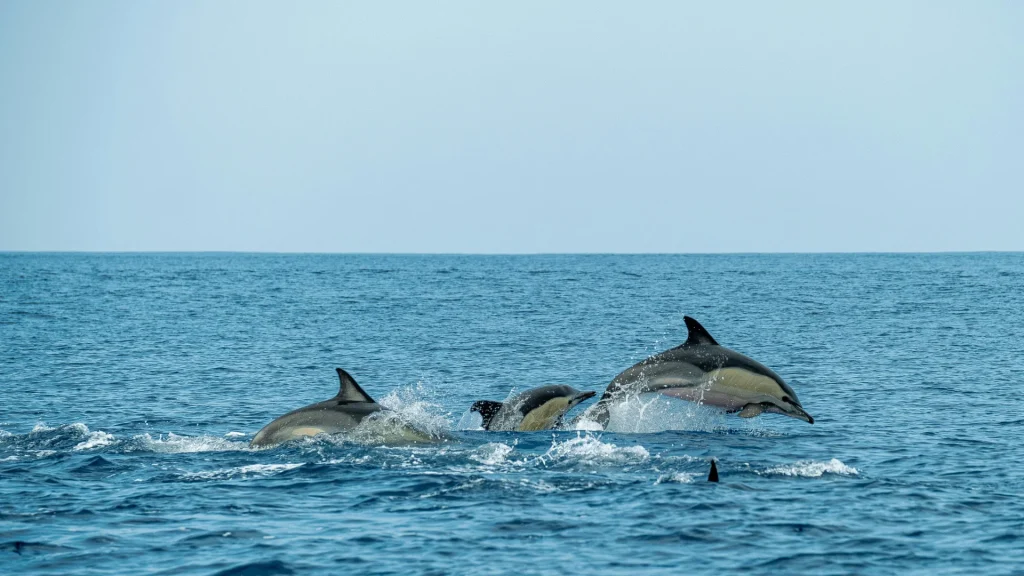
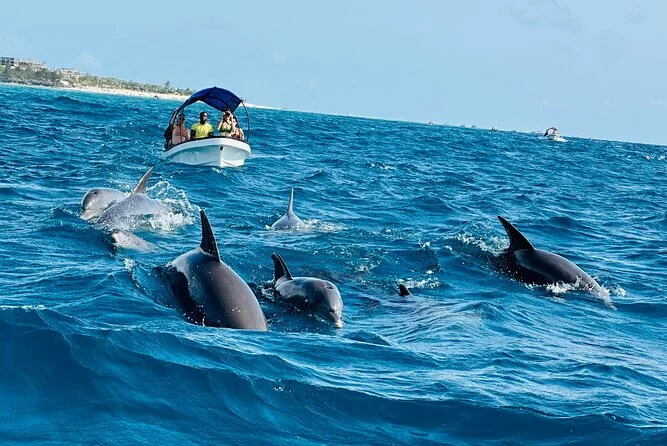

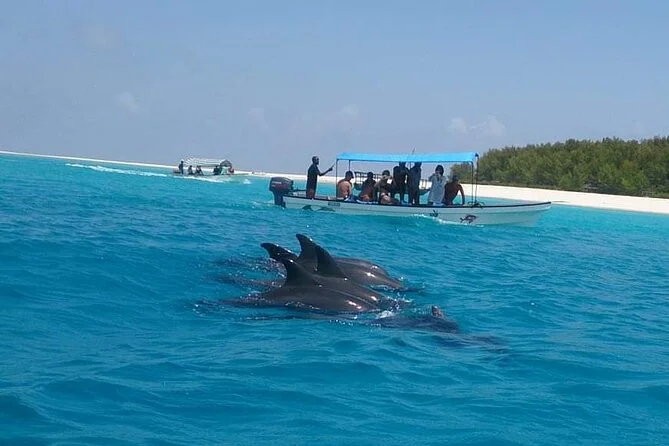
The village of Kizimkazi in southern Zanzibar is one of East Africa’s most reliable spots for dolphin watching in the wild. Spinner and bottlenose dolphins inhabit these waters year-round, but February’s calm morning seas make the boat trips smooth and the encounters particularly frequent. Heading out at dawn — before the heat builds and the sea breeze picks up — gives you the best conditions.
→ Book the Dolphin Tour Zanzibar
Kitesurfing at Paje

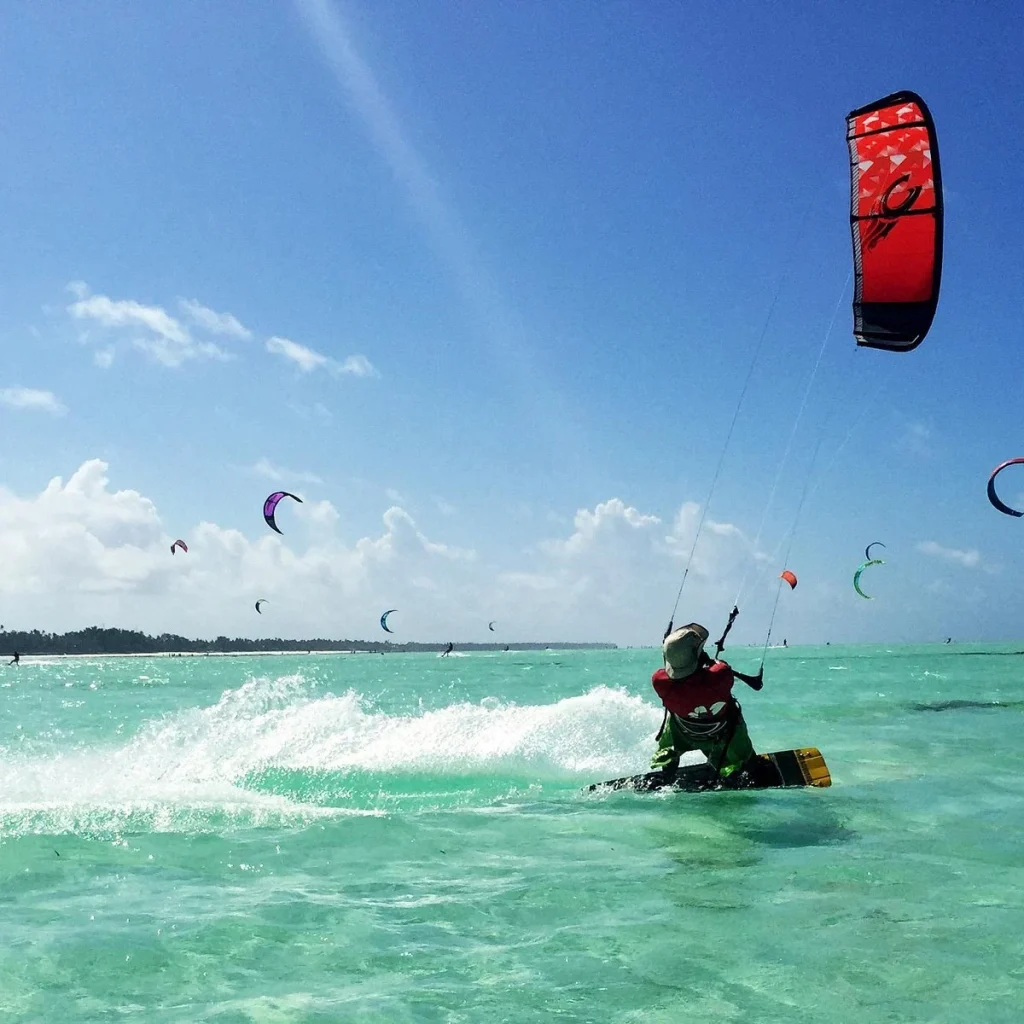



The northeast Kaskazi winds that characterise February create reliable, consistent conditions for kitesurfing on the east coast. Paje beach is Zanzibar’s kitesurfing hub, with several reputable schools offering lessons for beginners and open water sessions for experienced riders. The shallow turquoise lagoon at Paje is considered one of the best kitesurfing spots in East Africa.
→ See Kite Surfing in Zanzibar
Want to Do Multiple Things? Our Combo Tours Are Built for February
February’s weather is so reliable that many guests choose to combine multiple experiences into a single day. We offer a full range of combo tours designed to maximise your time on the island:
- Spice Farm & Jozani Forest Tour — a classic morning double
- Mnemba Island & Swimming with Turtles Tour — the ultimate ocean day
- Stone Town, Prison Island & Nakupenda Sandbank Tour — culture and sea in one itinerary
- Spice Farm, Jozani Forest & Paje Beach — inland nature followed by a beach afternoon
- Horse Riding, Swimming with Turtles & Nungwi/Kendwa Beach — adventurous and beautiful
If you’re staying 3–8 days, a holiday package makes the most sense. Our packages cover guided tours, accommodation, and transfers, starting from:
- 3 Days / 2 Nights Package from $295
- 5 Days / 4 Nights Package from $660
- 7 Days / 6 Nights Package from $955
→ See all Zanzibar Holiday Packages
How Busy Is Zanzibar in February? Crowds and Prices
February is unquestionably high season, and it’s important to approach it with that reality in mind.
Who travels to Zanzibar in February? A significant wave of European travelers — particularly from Italy, Germany, the UK, France, and Scandinavia — arrives in February to escape the northern winter. Valentine’s Day weekend also brings honeymooners and couples in large numbers. Add the Sauti za Busara festival crowds, and you have one of the island’s busiest months.
What this means practically:
- Hotels: Mid-range and luxury beachfront properties on the north coast (Nungwi, Kendwa) book out quickly. Aim to book your accommodation 6–8 weeks in advance minimum, and 3–4 months ahead for the best options during Sauti za Busara week.
- Tour prices: February is priced at peak season rates across most operators. Don’t expect off-season discounts.
- Popular tours: Safari Blue and Mnemba snorkeling have limited daily boat capacity. Walk-in bookings in February are a gamble. Reserve in advance through a trusted local operator.
- Restaurants: Forodhani Gardens, The Rock Restaurant, and popular beach clubs will be busy, especially on weekends.
The upside of the crowds: Everything is operating at its best. Guides are fully experienced, boats are well-maintained, restaurants are fully staffed, and the island has an energy and vibrancy that quieter months simply don’t match. February’s Zanzibar feels alive.
If you want help navigating availability — especially for the Sauti za Busara period — talk to our local team early. We know which dates fill first and how to build a February itinerary that still feels personal and unhurried.
What Should You Pack for Zanzibar in February?
February’s extreme heat and strong UV index demand careful packing. Here’s what actually matters:
Sun & Heat Protection — Your Top Priority
- Reef-safe sunscreen, SPF 50+ (the UV index in February is extreme — reapply every 2 hours on the water)
- Wide-brimmed hat that shades your face, neck, and shoulders
- Good quality UV-blocking sunglasses
- Long-sleeve UV-protection rash guard for snorkeling and boat trips
- After-sun aloe vera gel — your skin will thank you
Clothing
- Lightweight linen or cotton shorts, T-shirts, and sundresses — breathable fabrics only
- 2–3 swimsuits (they dry quickly, but you’ll be in and out of the water constantly)
- A light cotton cover-up or kaftan for beach-to-restaurant transitions
- Modest cover-up clothing for Stone Town — loose linen trousers and a light top show respect for local culture and custom
- Sandals and flip-flops for beach and general use; comfortable walking shoes for Stone Town and forest tours
Health & Practical Items
- Malaria prophylaxis — essential; speak to your travel doctor before you leave
- DEET-based insect repellent for evenings
- Electrolyte sachets or tablets — February heat causes dehydration fast, especially during active morning tours
- Reusable water bottle (large — 1.5L minimum)
- Dry bag for boat trips — your phone, camera, and documents will need protection from sea spray
- Basic first aid kit including blister plasters (cobblestones in Stone Town are tough on feet)
- Universal adapter (Tanzania uses UK-style Type G plugs)
What Not to Bring Anything warm. A light cardigan for air-conditioned restaurant dining is the maximum you’ll need — and even that is rarely necessary.
For a more detailed list, see our What to Pack for Zanzibar guide.
How to Handle the February Heat Like a Local
The February heat in Zanzibar deserves its own section, because travelers who don’t anticipate it can find the first day or two genuinely challenging. Here’s how we’d advise approaching it:
Drink water before you feel thirsty. By the time you’re thirsty in February heat, you’re already mildly dehydrated. Carry your water bottle everywhere and sip constantly.
Adopt the island pace. Zanzibar locals don’t rush in February. They slow down at midday and speed up again in the late afternoon. Borrow this rhythm — it’s not laziness, it’s wisdom.
Plan active activities for 7am–11am. Forest tours, Stone Town walks, cycling, and spice farm visits are all vastly more enjoyable in the morning. This is when the guides are freshest, the light is best for photography, and your body isn’t fighting the peak heat.
Use the midday heat for the ocean. The water is the most comfortable place to be between noon and 3pm. Swimming, snorkeling, or simply floating in the sea is the perfect February midday activity.
Seek shade, not just shelter. A beach umbrella or a shaded café terrace does more for your comfort than air conditioning in the long run — and keeps you connected to the beauty around you rather than a hotel room.
Take cold showers freely. Every guesthouse and hotel in Zanzibar has cold water available and in February it feels wonderful. There’s no better afternoon reset than a cold shower before dinner.
How Does February Compare to Other Months in Zanzibar?
| Month | Season | Weather | Crowds | Best For |
|---|---|---|---|---|
| Jan | Hot dry | Hot, mostly sunny | High | Beach, diving, all tours |
| Feb | Hot dry | Hottest & driest | High | Snorkeling, romance, culture |
| Mar | Rains begin | Mixed, warming | Low–Med | Budget travel |
| Apr | Long rains | Heavy rain | Very Low | Not recommended |
| May | Rains end | Improving | Low | Budget, quiet |
| Jun | Cool dry | Warm, pleasant | Med–High | All activities |
| Jul–Aug | Cool dry | Peak conditions | Very High | Everything |
| Sep–Oct | Cool dry | Excellent, cooler | High | Diving, wildlife |
| Nov | Short rains | Mixed | Low–Med | Shoulder deals |
| Dec | Hot dry | Warm, festive | Very High | Beach, New Year |
February vs January: February is slightly hotter and drier than January, with fewer rainy days and warmer sea temperatures. If you’re choosing between the two and the ocean is your priority, February edges ahead. If you want slightly cooler conditions with a similar experience, January is excellent.
February vs June–October: The cool dry season (June–October) is cooler and more physically comfortable for active travelers, and it’s when diving conditions are strong. But February’s warmer water temperatures and exceptional visibility make it the premier month for snorkeling and casual swimming. It’s a different experience, not a lesser one.
February vs March: Do not let flexibility take you into March if you’re primarily beach and water focused. March marks the beginning of the long rains, with rainfall increasing sharply as the month progresses. February is the last truly dry month before several months of weather uncertainty.
Getting to and Around Zanzibar in February
Arriving in Zanzibar
You’ll fly into Abeid Amani Karume International Airport (airport code: ZNZ), located just south of Stone Town. Direct and connecting flights arrive from Dar es Salaam (a short 20-minute hop), Nairobi, Dubai, Doha, Amsterdam, and other hubs. February is peak booking season — flights fill up, especially around Valentine’s Day and Sauti za Busara. Book your flights as early as possible.
Ferries from Dar es Salaam to Zanzibar run daily and take approximately 2 hours. February conditions on the channel are generally calm, making for a comfortable crossing — though fast-ferry passengers without sea legs may want to take motion sickness tablets as a precaution.
Getting around the island
Once on the island, the best way to explore depends on your plans:
- For guided tours, we handle all transport — you simply show up and we take care of the rest.
- For independent exploration, a rental car gives you the freedom to discover the island at your own pace.
- For getting to your hotel from the airport, or between different parts of the island, our private transfer service is reliable, comfortable, and priced competitively.
The roads in Zanzibar improve every year, but the north coast road and some east coast routes can still be rough. An SUV or 4WD rental is worth considering if you’re planning to explore beyond the main routes.
February Tips From Our Local Team
These are the practical insights we share with every guest planning a February trip:
1. Book 6–8 weeks ahead at minimum. For accommodation and high-demand tours (Safari Blue, Mnemba), 3–4 months is safer. February is one of the two busiest months on the island.
2. Time your Sauti za Busara attendance wisely. Stone Town is at its most electric during the festival, but accommodation within walking distance of the Old Fort is extremely limited during those specific nights. Book early, or plan on a taxi ride in.
3. Carry cash in small denominations. Many beach vendors, local restaurants, and market stalls in Zanzibar prefer cash. USD is widely accepted alongside Tanzanian Shillings (TZS). Stock up before heading to more remote areas.
4. Respect local customs, especially during Ramadan. Zanzibar is a predominantly Muslim island. While 2026 Ramadan dates fall in late February to March — check exact dates for your year — even outside Ramadan, dressing modestly in non-beach areas is both respectful and expected.
5. Don’t skip the evenings in Stone Town. The combination of Sauti za Busara energy, Forodhani Gardens street food, rooftop bars, and the warm February evening air makes Stone Town after sunset one of the most memorable urban experiences in East Africa.
6. Negotiate your schedule around the tides on the east coast. If you’re visiting Paje or Jambiani, check the tide tables before planning your day. At low tide, the shallow lagoon retreats significantly — beautiful for walking, but not for swimming. High tide gives you the full turquoise experience.
7. Invest in quality reef-safe sunscreen before you arrive. Sunscreen sold at tourist shops in Zanzibar is expensive and not always reef-safe. Bring two full bottles from home — you’ll use all of it.
Frequently Asked Questions: Zanzibar Weather in February
Is February the best month to visit Zanzibar?
For most travelers — particularly those focused on beaches, snorkeling, and sunshine — February is one of the best months to visit Zanzibar, if not the best. It is the hottest, sunniest, and driest month of the year. Sea temperatures and visibility are at their annual peak. The only trade-offs are the intense heat and high-season prices and crowds.
Does it rain a lot in Zanzibar in February?
No — February is the driest month in Zanzibar’s calendar. Monthly rainfall averages just 40–50mm, spread across roughly 5–7 days of brief showers. The vast majority of days are sunny and clear, particularly in the mornings. February rain is almost always short, warm, and unlikely to meaningfully disrupt your plans.
What is the sea temperature in Zanzibar in February?
The Indian Ocean around Zanzibar reaches 28–30°C (82–86°F) in February — the warmest water temperatures of the entire year. No wetsuit is needed for swimming or snorkeling. Scuba divers doing multiple long dives may prefer a thin 3mm wetsuit for thermal comfort over extended sessions.
Is February good for snorkeling and diving in Zanzibar?
February is excellent — arguably the best month of the year — for snorkeling. Warm water, exceptional visibility (up to 30 metres at Mnemba Atoll), and calm surface conditions all combine to create near-perfect underwater experiences. For scuba diving, February is also strong, though experienced divers chasing strong currents may prefer the cool dry season months of July–October.
How busy is Zanzibar in February?
Very busy. February is peak season, with large numbers of European tourists, Valentine’s Day couples, and festival attendees converging on the island. Popular beaches and tours fill up. Hotels — especially beachfront properties on the north coast — book out weeks in advance. Book everything early.
What beaches are best in Zanzibar in February?
For swimming and snorkeling: Nungwi and Kendwa on the north coast offer the calmest, deepest waters year-round. Matemwe on the northeast is beautiful and close to Mnemba Atoll. For the iconic shallow turquoise lagoon experience: Paje and Jambiani on the east coast — plan visits around high tide. For a romantic and secluded feel: Bwejuu on the east coast or Ras Nungwi area on the very northern tip.
Is February a good month for a honeymoon in Zanzibar?
February is one of the top honeymoon months in Zanzibar. The weather is reliably beautiful, the beaches are stunning, the sea is warm, and the island has an inherently romantic atmosphere. Valentine’s Day falls in February, and many resorts and hotels offer special packages for couples. Just book well in advance — honeymoon accommodation around Valentine’s week books out first.
Can I visit Zanzibar in February with children?
Absolutely. February’s reliable weather, safe calm beaches on the north coast, and the wide range of child-friendly activities (Prison Island tortoises, snorkeling, spice farms, dolphin watching) make it an excellent family month. Keep children well protected from the sun — the UV index is extreme in February — and plan afternoon rest breaks during the hottest hours of the day.
Do I need a visa to visit Zanzibar in February?
Zanzibar is part of Tanzania, so entry requirements depend on your nationality. Most visitors require a Tanzanian visa, which can be obtained as an e-visa online before departure or on arrival at Zanzibar International Airport. Our Zanzibar Visa Guide covers requirements by nationality in full — check it before you travel.
Wrapping Up Your Zanzibar Weather in February Guide
Zanzibar weather in February delivers the ultimate tropical high: scorching sunshine, minimal rain, and ocean temperatures that feel like a warm bath. With 32–33°C days, just 50–55mm of rain, and 8–10 hours of daily sun, it’s peak season for beach lovers, divers, and music fans alike.
We’ve covered everything from temperature details and packing lists to festival dates and pro tips—so you can arrive confident and relaxed. At Visit Zanzibar Island Tours, we’ve turned these perfect February conditions into unforgettable journeys for travelers worldwide through our expert-guided tours and customizable packages.
Ready to experience it for yourself? Check our Zanzibar Packages starting from just $295 or contact our team today for a personalized quote. Let’s craft your February paradise—talk soon! Safe travels and see you on the island.
Explore More From Visit Zanzibar Island: